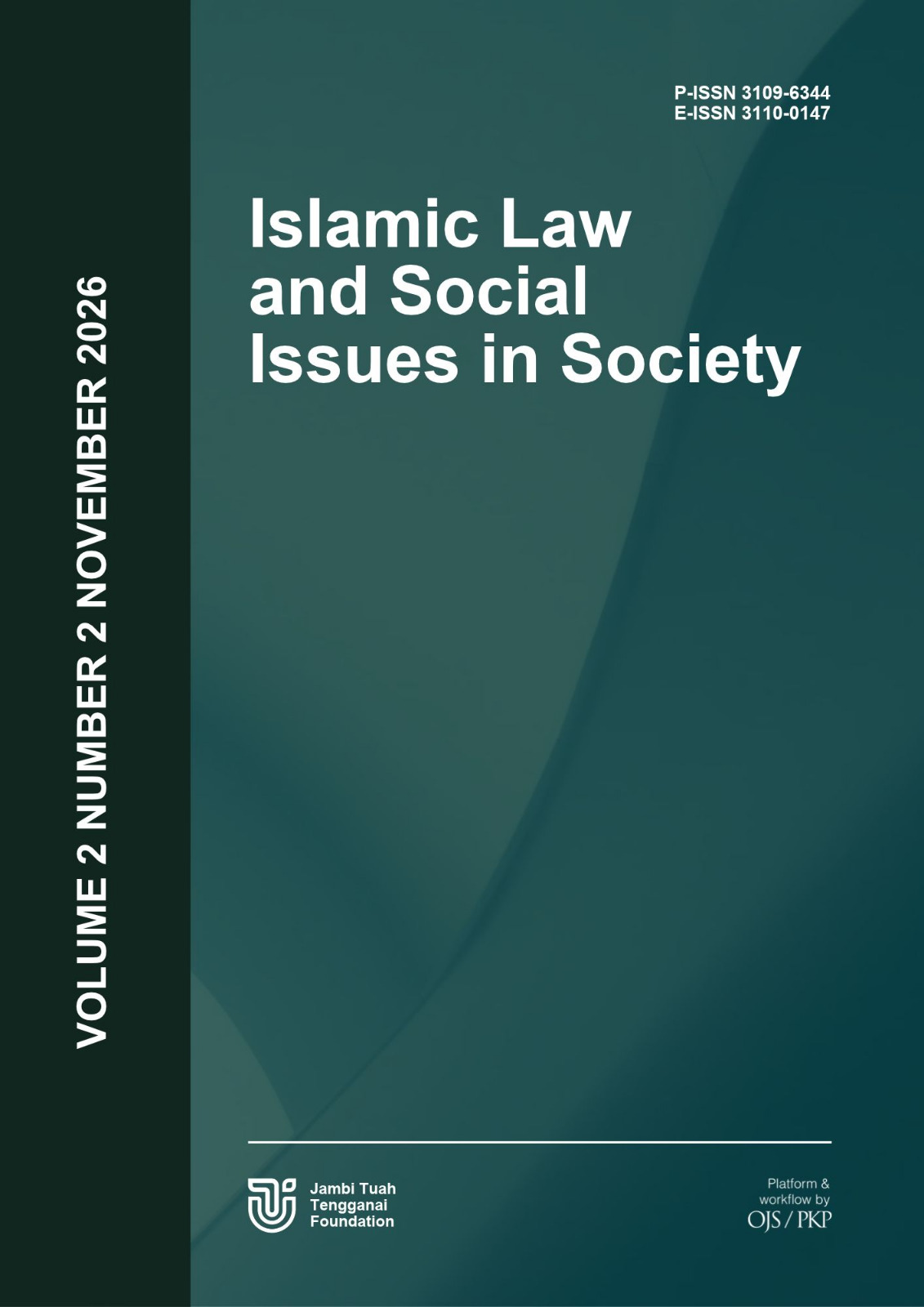
Algorithmic Accountability through Maqasid al-Shari’ah: Toward an Islamic Juridical Framework for Evaluating Artificial Intelligence Harms
DOI:
https://doi.org/10.64929/ilsiis.v2i2.69Keywords:
Maqasid al-Shari'ah, Artificial Intelligence, Algorithmic Accountability, AI Ethics, Islamic Legal TheoryAbstract
Algorithmic systems increasingly shape access to credit, healthcare, employment, and governance in Muslim-majority societies, yet their evaluation remains largely grounded in Euro-American ethical frameworks. This study addresses the absence of an operational Islamic juridical approach by mapping contemporary algorithmic harms onto the framework of maqāṣid al sharīʿah. Using a doctrinal analytical method rooted in uṣūl al fiqh and informed by recent AI ethics scholarship from 2018 to 2025, the study identifies five major categories of harm: bias, opacity, surveillance, labour displacement, and autonomous decision making. These harms are then mapped onto the five classical objectives and assessed across the three levels of ḍarūriyyāt, ḥājiyyāt, and taḥsīniyyāt. The findings reveal a structural mismatch between existing Islamic institutional guidance, which largely operates at the level of refinements and needs, and the reality that many algorithmic harms function at the level of necessities, posing risks to the protection of life, intellect, property, religion, and progeny. To address this gap, the study proposes a four-stage juridical review procedure consisting of classification, harm identification, maqāṣid mapping, and juridical determination. This framework contributes to Islamic legal theory and AI ethics by translating classical juristic reasoning into an operational and context-sensitive evaluative model. It offers a practical tool for sharīʿah advisory bodies, regulators, and ethicists to assess algorithmic systems while preserving the normative foundations of Islamic jurisprudence in contemporary technology governance.
Downloads
Published
How to Cite
Issue
Section
Citation Check
License
Copyright (c) 2026 Mohamed Cheikh Banane, Abderrazzak Sbihi, Zinah Ghanim Younus, Jaber Ali Ahmed Qitoon Al Shahri

This work is licensed under a Creative Commons Attribution-ShareAlike 4.0 International License.